Project Background and Client Profile
Challenges in Setting Up a Bottled Water Business in Syria
Turnkey Solution Provided
Bottled Water Production Line Overview
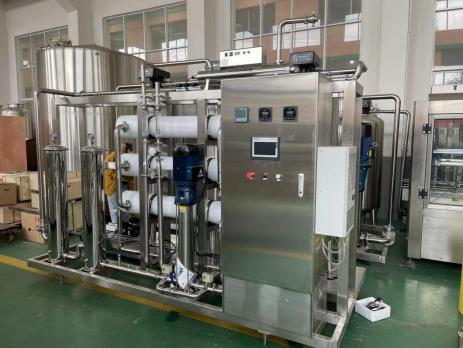
Integrated Water Treatment System
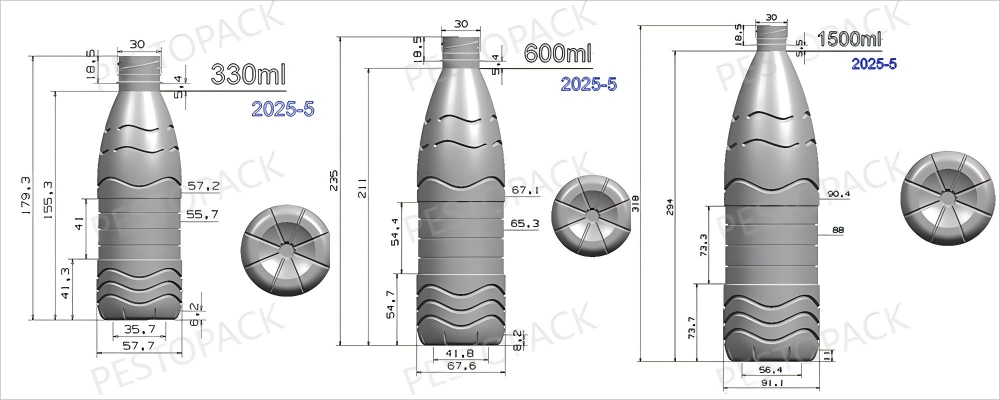
Bottle Design Customization for the Client
Supply of Preforms, Caps, Labels, and Film
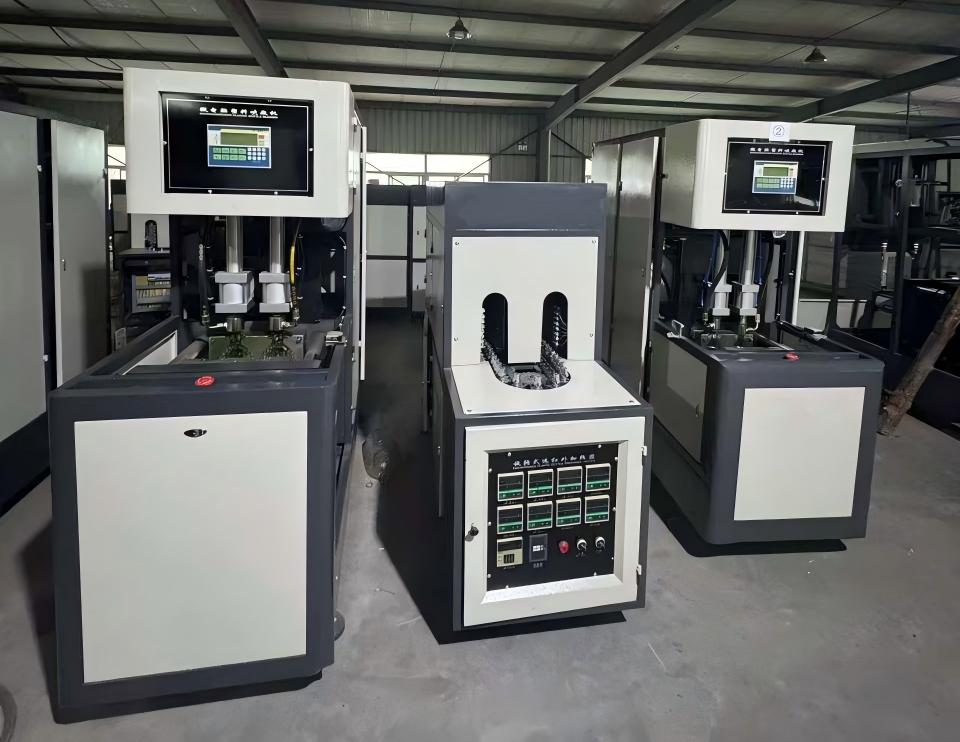
Semi-Automatic Blow Molding Machine (4 cavities)
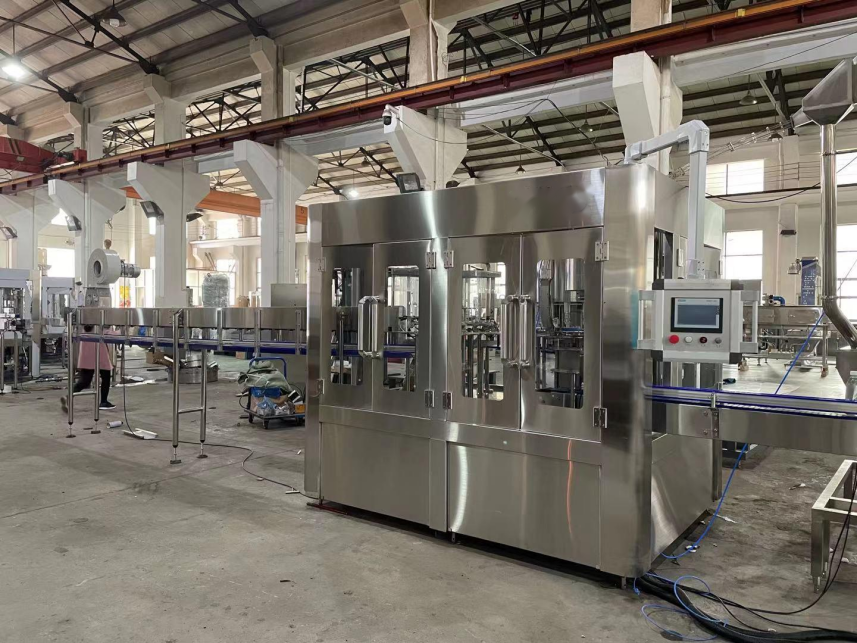
3-in-1 Full Automatic Water Filling Machine
Semi-Automatic Sleeve Labeling Machine
Laser Coding Machine
Semi-Automatic Shrink Packaging Machine
Line Layout and Schematic Overview
On-Site Installation & Technical Training
Client Feedback & Performance After Commissioning
Cost-Benefit Analysis for Small Investors
FAQs on Setting Up a 2000BPH Water Line
Conclusion and Strategic Guidance
Project Background and Client Profile
In early 2025, a Syrian entrepreneurial team approached us with a clear vision: to launch a cost-effective, medium-output bottled water production line targeting their regional market. The client represented a small startup venture, focusing on healthy drinking water alternatives for local communities in post-conflict recovery zones.
The business model centered on daily bottled water demand, with a projected start-up capacity of 2000 bottles per hour (BPH), expandable over time. This setup had to balance cost-efficiency, automation, ease of operation, and long-term sustainability.
Challenges in Setting Up a Bottled Water Business in Syria
Launching a bottled water business in Syria comes with a set of unique challenges:
Unstable infrastructure: Intermittent electricity and limited access to modern utilities.
Water quality variations: Raw water quality differs significantly by region, requiring a tailored treatment approach.
Regulatory compliance: Meeting Syrian standards for bottled water, including labeling, hygiene, and shelf-life.
Limited skilled labor: Machines needed to be user-friendly with simple training modules.
We considered each factor to provide a robust, semi-automatic solution that would withstand the local environment and ensure production continuity.
Turnkey Solution Provided
To ease the client's startup journey, we provided a complete one-stop solution:
Customized layout design suitable for their 200m² factory space
All equipment and raw materials from a single vendor
Pre-installation testing and quality inspection
Remote and onsite training for operators
After-sales technical support and spare parts
The emphasis was on providing not just machines, but a turnkey water bottling plant.
Bottled Water Production Line Overview
Our team engineered a 2000BPH semi-automatic production line, integrating key machines into a smooth, human-assisted operation.
The production flow is as follows:
Integrated Water Treatment Syste
Preform loading and blowing
Bottle rinsing, filling, and capping
Sleeve labeling and date coding
Shrink wrapping for retail packs
Each section of the line was chosen based on its efficiency, price-performance ratio, and simplicity in operation for small factory setups.
Integrated Water Treatment System
To ensure top-tier water quality, we included a comprehensive water treatment system:
Raw water pump - Delivers untreated water into the treatment line with stable pressure.
Quartz sand filter – Removes large particles
Activated carbon filter – Absorbs chlorine and odors
Softener system – Controls hardness
Precision filter – Further filtration down to 5 microns
Reverse osmosis system (RO) – Removes dissolved solids and microbes
UV sterilizer and ozone mixer – Final disinfection step
Storage tank - Holds the treated water in a hygienic environment before bottling.
This system guarantees that the treated water meets both Syrian national standards and WHO guidelines for drinking water.
Bottle Design Customization for the Client
We helped the client develop 3 bottle types to cater to diverse customer needs:
| Size | Weight |
| 330ml | 13g |
| 600ml | 18g |
| 1500ml | 28g |
The 3025 cap was selected for its universal compatibility and tight sealing. Design schematics and mold customization were completed within 10 working days, fully aligned with the client's branding.
Supply of Preforms, Caps, Labels, and Film
We also provided full material support, including:
PET preforms (custom colors optional)
3025 HDPE caps (with tamper-proof ring)
Shrink sleeve labels (print-ready)
Shrink film for outer packing
This all-in-one supply system minimized the client's time-to-market and simplified their procurement process.
Semi-Automatic Blow Molding Machine (4 cavities)
We configured a semi-auto blow molding machine with 4 cavities. Key highlights include:
Infrared heater with precision temperature control
Preform clamping and stretching via pneumatic operation
Output: 1800–2000 bottles/hour depending on size
Compatible with 330ml to 1500ml molds
This compact system was ideal for low initial investment, allowing the client to start without a fully automatic blowing system.
3-in-1 Full Automatic Water Filling Machine
This full-auto filling unit handles rinse, fill, and cap in one compact machine. Key specs:
Rinse heads: 8
Filling heads: 8
Capping heads: 3
Operators can achieve high filling precision, and the switch between bottle sizes is fast and user-friendly.
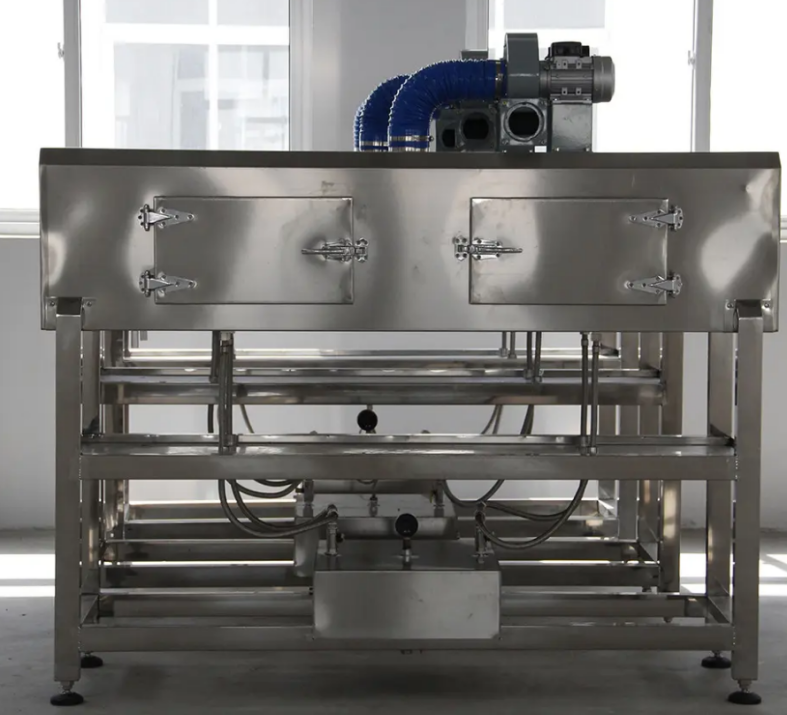
Semi-Automatic Sleeve Labeling Machine
The sleeve labeler ensures high-speed, accurate label placement. Features include:
It supports full-body labels and tamper-evident neck bands.
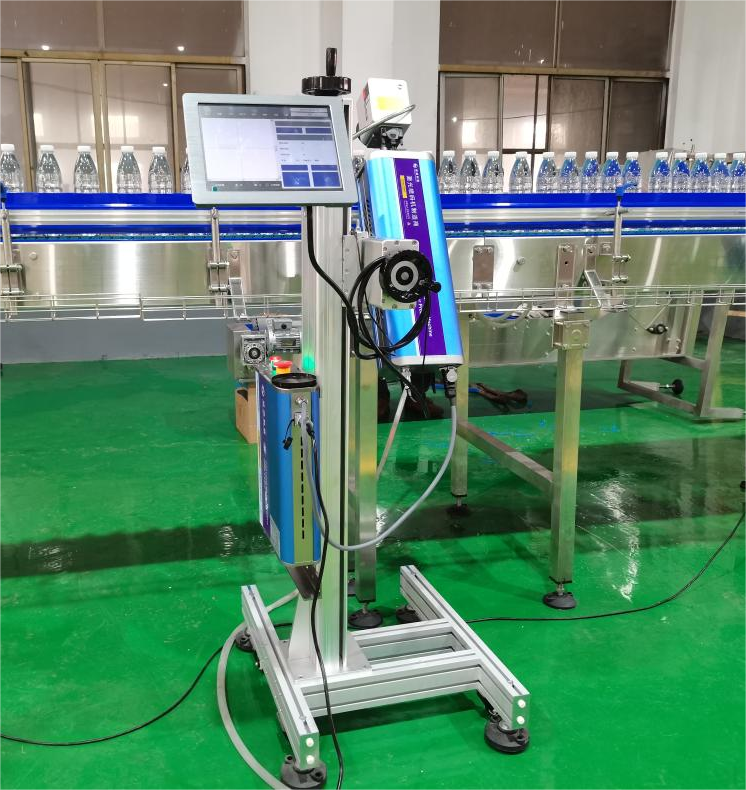
Laser Coding Machine
For compliance and traceability, we installed a high-speed laser coder:
CO₂-based system with permanent marking
Supports date, batch, and QR code printing
Maintenance-free design
Line speed: up to 200 bottles/min
Ideal for small businesses that need a durable, ink-free solution.
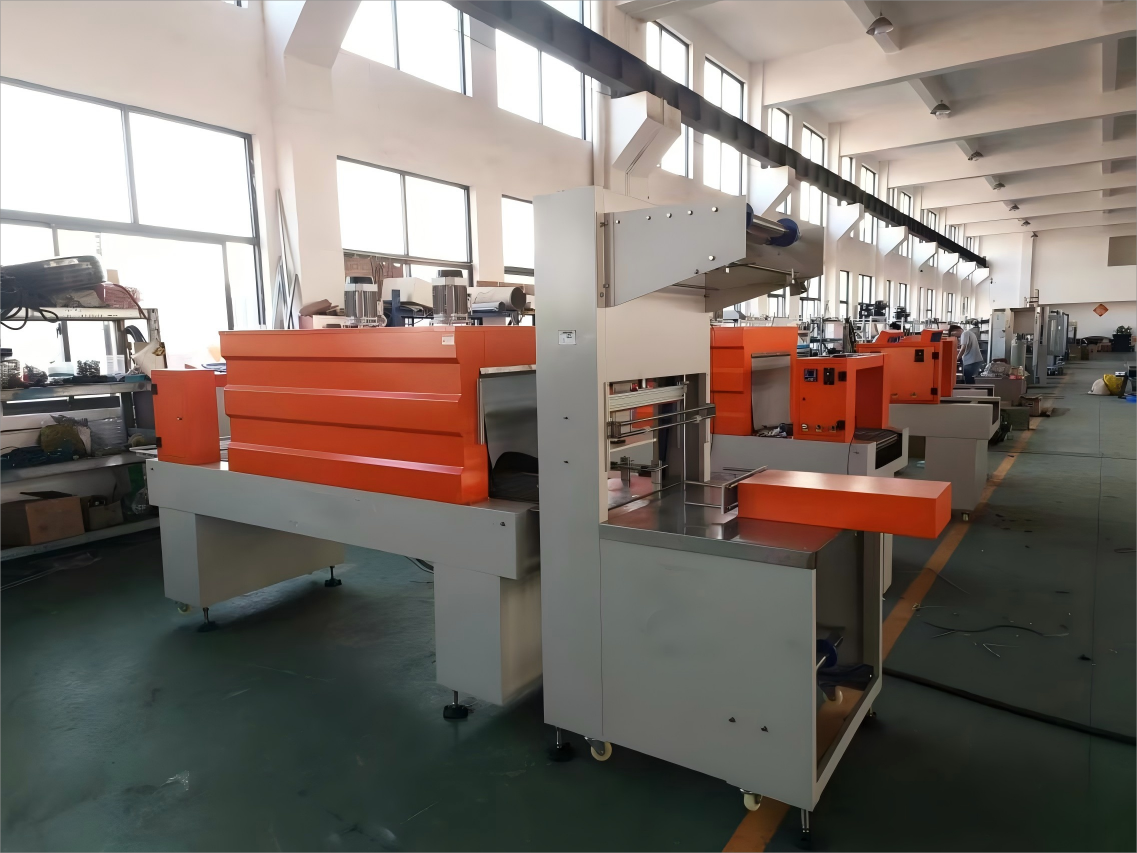
Semi-Automatic Shrink Packaging Machine
This cost-efficient unit wraps bottles into 6, 12, or 24 packs. Benefits include:
Automatic film wrapping with manual feeding
Adjustable tunnel temperature
Stainless steel conveyor for durability
Output: up to 8 packs/min
A great tool for businesses entering supermarket channels.
Line Layout and Schematic Overview
The production layout was carefully crafted to optimize material flow, energy consumption, and operator comfort. Here is a simplified schematic:
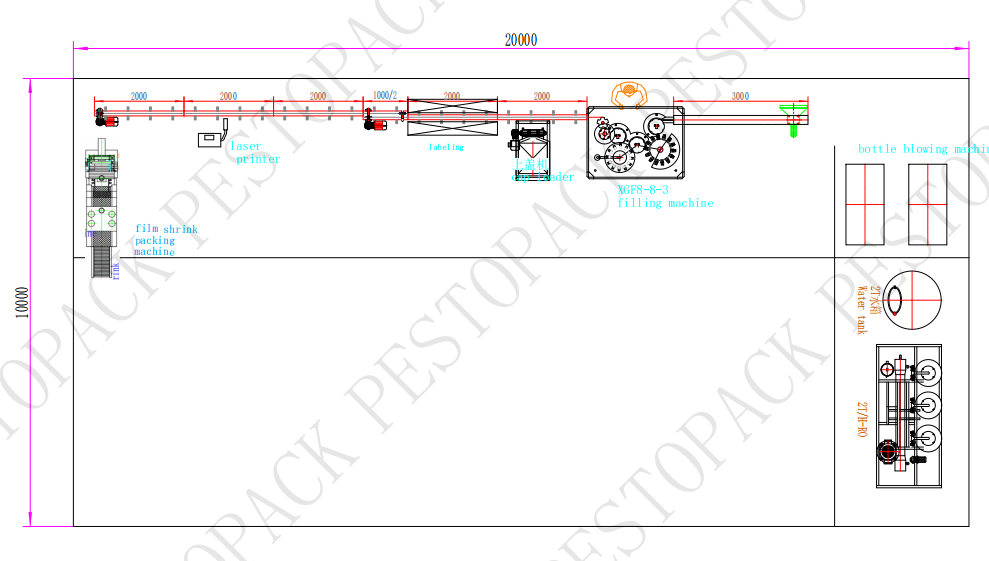
This U-shaped layout minimizes walking distance and ensures visibility across the production line.
On-Site Installation & Technical Training
To ensure a smooth launch, our engineering team provided remote pre-installation guidance and later assisted with on-site commissioning through a certified regional partner.
Key steps in the process included:
Foundation and utility planning: Assisting the client in setting up power, water, and air supply points based on our machine layout.
Machine unpacking and positioning: Guiding the team step-by-step with photos and video calls.
Wiring and piping: Detailed wiring diagrams and pneumatic layout for safe connection.
Trial production run: Calibrating all machines to ensure stable operation and line synchronization.
Operator training: Hands-on training provided to 3 factory staff, covering:
Startup and shutdown procedures
Daily cleaning and maintenance
Troubleshooting common faults
Changeover for different bottle sizes
Client Feedback & Performance After Commissioning
Just two months after the line was commissioned, the client reported:
Daily output of 16,000–18,000 bottles, with less than 0.5% defect rate.
Stable quality control from blow molding to labeling.
Positive feedback from retailers about the bottle design and label clarity.
Efficient packaging that meets supermarket and small retail shop standards.
Minimal downtime thanks to preventive maintenance training.
They were also able to break even on equipment investment in just 8 months, exceeding their initial business projections.
Cost-Benefit Analysis for Small Investors
Here's a breakdown of how this semi automatic 2000bph bottled water line with three bottle sizes delivers value to startups and small companies:
| Component | Investment (USD) | Key Value |
| Water treatment system | $10,000 | Long-term water quality stability |
| Semi-auto blow molding | $15,500(three bottle sizes) | Replaces need for expensive pre-blown bottles |
| 3-in-1 filling unit | $14,000 | Compact, efficient bottling |
| Sleeve labeler | $3,000 | Branding and product aesthetics |
| Laser coder | $3,000 | Batch traceability |
| Shrink packer | $4,000 | Retail-ready packs |
| Conveyor system | $2,500 | Move bottles |
| Total | ~$52,000 | High return on investment |
Over a 12-month period, this setup allows a startup to produce over 5 million bottles/year, generating potential net profits exceeding $50,000, depending on market price and distribution reach.
FAQs on Setting Up a 2000BPH Water Line
1. How much space is required for this full semi-automatic line?
A minimum of 150-200m² is recommended, including storage for raw materials and finished goods.
2. Can one operator manage the whole line?
At least 4 operators: one for blow molding, one for filling and capping, one for labeling, and one for packaging.
3. What's the electricity requirement?
Around 100-150 kW total, with 380V 3-phase power recommended.
4. How often does the water treatment system need maintenance?
Filter replacements and sanitization every 6 months, depending on raw water quality.
5. Can we print in Arabic on labels and codes?
Yes. Labels can be customized, and the laser coder supports Unicode including Arabic.
6. How long does shipping and setup take?
Shipping to Syria takes 20–30 days, with installation completed within 10-15 days upon arrival.
Conclusion and Strategic Guidance
This project showcases how a Syrian startup successfully entered the bottled water industry with a scalable, semi-automatic 2000BPH production line. The key success factors included:
Choosing the right mix of automation and manual operation
Relying on modular equipment that balances cost and output
Having access to a complete raw material supply chain
Receiving end-to-end support from layout to training
For small businesses or startups with limited capital, this setup offers an excellent balance between affordability and output capacity—perfect for establishing a foothold in local water markets.
With proper marketing and distribution, clients can expect a fast ROI and the flexibility to expand operations over time.

 العربية
 English
 Français
 Русский
 Español
 Português
 Tiếng Việt
 ไทย
ไทย Polski
 Türkçe
 አማርኛ
አማርኛ ဗမာစာ
ဗမာစာ தமிழ்
தமிழ் Filipino
 Bahasa Indonesia
 magyar
 Română
 қазақ
қазақ हिन्दी
 فارسی
فارسی Kiswahili
 українська
 Հայերեն
 עברית
עברית বাংলা
বাংলা සිංහල
සිංහල Oʻzbekcha
 Azərbaycan dili
 Български
 ქართული
 guarani
 ગુજરાતી
 Hausa
Hausa Igbo
Igbo ಕನ್ನಡ
ಕನ್ನಡ Kinyarwanda
 Kurdî
Kurdî Кыргызча
 Oluganda
 മലയാളം
 मराठी
मराठी Afaan Oromoo
 ਪੰਜਾਬੀ
 Runasimi
 chiShona
 Soomaali
 Тоҷикӣ
 తెలుగు
 ትግንያውያን
 Türkmençe
 Yorùbá
 isiZulu