Introduction
Why Choosing the Right Water Bottling Machine Manufacturer Matters
How We Selected the Top 25 Water Bottling Machine Manufacturers
Comparison Table of Water Bottling Machine Manufacturers
Top 25 Water Bottling Machine Manufacturers in 2026
Regional Insights
Industry Trends & Market Outlook
Frequently Asked Questions About Water Bottling Machine Manufacturers
Conclusion
Internal Resources
Introduction
The bottled water industry continues to grow worldwide, driven by rising health awareness, increasing demand for safe drinking water, and the popularity of premium and flavored products. To meet this demand, businesses rely on the expertise of water bottling machine manufacturers. Choosing the right partner ensures production efficiency, cost savings, and reliable after-sales service.
This guide introduces the Top 25 Water Bottling Machine Manufacturers in 2026, covering their strengths, specialties, and global market presence.
Why Choosing the Right Water Bottling Machine Manufacturer Matters
Production Efficiency
A well-designed bottling line can process anywhere from 2,000 to 80,000 bottles per hour, directly impacting factory output and profitability.
Cost and ROI
Low-cost equipment may reduce the initial investment, but frequent downtime, high maintenance expenses, and limited production efficiency can quickly offset those savings. Before comparing suppliers, review our detailed water bottling plant cost guide to understand how production capacity, automation level, water treatment, bottle blowing, labeling, packaging, installation, and shipping affect the total project budget. The best manufacturers balance competitive pricing with long-term durability, stable performance, and reliable after-sales support.
After-Sales Service
Reliable global service, technical support, and spare parts availability are critical for minimizing downtime and keeping production stable.
How We Selected the Top 25 Water Bottling Machine Manufacturers
Experience and Certifications: Proven track record in bottled water and ISO/CE certifications.
Global Reach: Service networks and installations across multiple continents.
Technology and Innovation: Automation, sustainability, and flexibility in bottling solutions.
Comparison Table of Water Bottling Machine Manufacturers
| Manufacturer | Country | Strengths | Capacity Range | Notable Feature |
| Pestopack | China | Factory-direct, global service | 2,000–36,000 BPH | Competitive pricing |
| Krones | Germany | Global leader, turnkey lines | 12,000–80,000 BPH | Advanced automation |
| KHS | Germany | Sustainable technology | 10,000–72,000 BPH | Eco-friendly solutions |
| Sidel | France | PET bottling expertise | 8,000–65,000 BPH | Lightweight design |
| GEA Group | Germany | Aseptic systems | 5,000–50,000 BPH | Hygienic production |
| SACMI | Italy | Modular solutions | 5,000–40,000 BPH | Flexibility |
| Norland International | USA | Startup-focused | 1,000–12,000 BPH | Compact systems |
| Accutek Packaging | USA | Affordable & flexible | 1,000–24,000 BPH | Entry-level lines |
(Full details are in each manufacturer’s profile below)
Top 25 Water Bottling Machine Manufacturers in 2026
1. Pestopack Machinery (China)
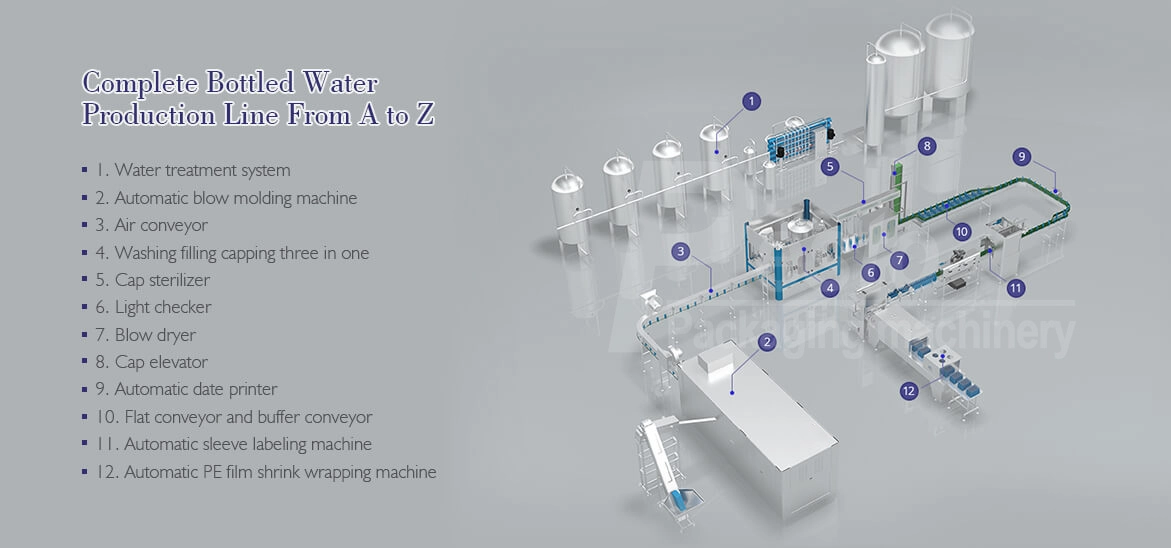
Pestopack Machiner offers factory-direct pricing and complete turnkey solutions for bottled water plants. With over 20 years of industry experience, Pestopack serves clients worldwide across diverse markets.
The product portfolio covers 2,000–36,000 BPH bottling lines, delivering customized designs, reliable quality, and comprehensive global after-sales service. Please explore our water bottling line.
2. Krones (Germany)
Krones is one of the largest and most advanced water bottling machine manufacturers, delivering complete turnkey systems for PET, glass, and cans. Their lines are capable of up to 80,000 BPH, making them the preferred choice for multinational beverage companies.
With a focus on automation and sustainability, Krones invests in lightweight PET designs, energy-efficient heating, and water-saving rinsers. Though their systems require significant investment, they provide unmatched durability and long-term ROI.
3. KHS (Germany)
KHS specializes in efficient and eco-friendly bottling solutions. Their InnoPET Blomax blow molders and Innofill systems are widely used by water brands looking for precision and reliability.
They are best known for their Nature MultiPack™ innovation, which drastically reduces plastic packaging. With modular lines handling 10,000–72,000 BPH, KHS is ideal for producers prioritizing sustainability and scalability.
4. Sidel (France)
Sidel is a PET packaging pioneer, offering complete lines from bottle design to filling and labeling. Their lines range from 8,000 to 65,000 BPH, serving both small brands and global leaders.
They focus on lightweight PET bottles and aseptic PET filling, ensuring reduced costs and extended shelf life for flavored or functional water.
5. GEA Group (Germany)
GEA is known for its aseptic and hygienic filling technologies, serving dairy and water industries worldwide. Their systems handle 5,000–50,000 BPH, focusing on safety and precision.
Automation, energy efficiency, and hygienic design make GEA attractive for water brands requiring reliable and clean production.
6. SACMI (Italy)
SACMI designs modular bottling systems suitable for both medium and large-scale producers. Their flexible approach allows upgrades as businesses grow.
They emphasize innovation and versatility, with production speeds from 5,000–40,000 BPH, widely applied in Europe and Latin America.
7. AVE Technologies (Italy)
AVE Technologies specializes in water, wine, and juice bottling systems. Their solutions are popular among mid-sized producers for affordability and reliability.
They are recognized for user-friendly operation and European build quality, serving brands across multiple continents.
8. IC Filling Systems (UK)
IC Filling Systems provides compact bottling solutions for breweries, wineries, and small water plants. Their portable and mobile systems make them unique.
They are ideal for small and medium enterprises, offering customized solutions at accessible price points.
9. Norland International (USA)
Norland International focuses on complete water bottling solutions for startups, including purification, filling, and packaging.
Their systems typically range from 1,000–12,000 BPH, making them perfect for small and growing bottled water businesses.
10. Filamatic (USA)
Filamatic provides flexible liquid filling machines used in beverages, pharmaceuticals, and cosmetics.
For water bottling, they are best known for semi-automatic to fully automatic solutions, catering to diverse production needs.
11. Accutek Packaging (USA)
Accutek offers one of the broadest portfolios in the U.S., covering piston, gravity, and servo fillers.
They serve small to medium-scale producers, with lines ranging from 1,000–24,000 BPH, and are known for affordable entry-level lines.
12. Federal / ProMach (USA)
Federal, part of ProMach, specializes in sanitary filling systems, particularly for milk, juice, and water.
Their strength lies in hygienic rotary fillers and strong integration with complete packaging solutions.
13. Inline Filling Systems (USA)
Inline Filling Systems builds overflow, gravity, piston, and pump fillers for water and beverages.
They target SMEs and offer flexible, U.S.-built equipment designed for scalability and customization.
14. E-PAK Machinery (USA)
E-PAK Machinery provides cost-effective bottling systems for water, sauces, and other liquids.
With a wide selection of fillers, they are popular among mid-sized bottled water producers.
15. Shemesh Automation (UK)
Shemesh Automation is a global supplier specializing in turnkey packaging lines for beverages and chemicals.
Their systems are recognized for automation and reliability, serving clients in over 30 countries.
16. Ronchi Mario (Italy)

Ronchi Mario is famous for precision filling and capping machines. Though widely used in cosmetics, they also serve the water and beverage sector.
They stand out for servo-driven technology and Italian engineering quality.
17. Serac (France)
Serac is a leader in weight-based filling systems, widely used for water, dairy, and edible oils.
Their precision technology ensures minimal waste and consistent quality across batches.
18. OPTIMA Packaging Group (Germany)
OPTIMA designs high-tech filling and packaging equipment for beverages and pharmaceuticals.
Their bottling systems are known for automation, hygiene, and flexibility, serving premium water producers.
19. IMA Group (Italy)
IMA Group is a global engineering firm with advanced bottling and packaging technologies.
Their aseptic and high-speed filling systems are ideal for large-scale bottled water brands.
20. Bosch/Syntegon (Germany)
Formerly Bosch Packaging, Syntegon is a global leader in automated filling and packaging lines.
They deliver high-precision bottling systems with a strong reputation in the pharmaceutical and beverage industries.
21. APACKS (USA)
APACKS manufactures bottling lines that balance affordability and performance.
They are popular among small and medium water bottlers for reliable entry-level systems.
22. Liquid Packaging Solutions (USA)
Liquid Packaging Solutions provides flexible systems for both small startups and established plants.
Their lines are customizable, allowing businesses to expand capacity as demand grows.
23. NJM Packaging (USA)
NJM Packaging, part of ProMach, supplies bottling equipment to both pharmaceutical and beverage industries.
They are trusted in the U.S. market for durable machines and strong after-sales support.
24. Tech-Long (China)
Tech-Long is one of China’s most established bottling equipment manufacturers, with installations in more than 60 countries. They provide blow molding, filling, and packaging systems at competitive prices.
With capacities ranging from 6,000–60,000 BPH, Tech-Long combines affordability with advanced engineering, making them a strong alternative to European giants.
25. NewamStar (China)

NewamStar specializes in high-speed beverage bottling lines, particularly in water and carbonated drinks. Their rotary fillers can reach 72,000 BPH.
They are known for engineering innovation and complete turnkey plants, making them a preferred supplier in Asia and emerging markets.
Regional Insights
North America
The U.S. is home to Accutek, Filamatic, Federal/ProMach, and Norland International, serving both startups and large-scale plants. Many focus on flexibility and modular designs to meet diverse customer needs.
Europe
Germany, France, and Italy dominate with giants like Krones, KHS, GEA, Sidel, and SACMI. Europe emphasizes automation, energy efficiency, and sustainability, setting the global benchmark.
Asia-Pacific
China’s Tech-Long, NewamStar, and Pestopack Machinery are rapidly expanding their global footprint. They offer competitive factory-direct pricing, strong customization, and full turnkey solutions, making them attractive to emerging markets.
Middle East & Africa
Growing bottled water consumption fuels demand for cost-effective bottling lines. Chinese and European manufacturers are both expanding here, with Pestopack having multiple successful projects in the region.
Latin America
Brands seek affordable yet robust bottling machinery, often importing from the U.S. and Europe. The trend toward mid-range capacity (6,000–18,000 BPH) is strong in this region.
Industry Trends & Market Outlook
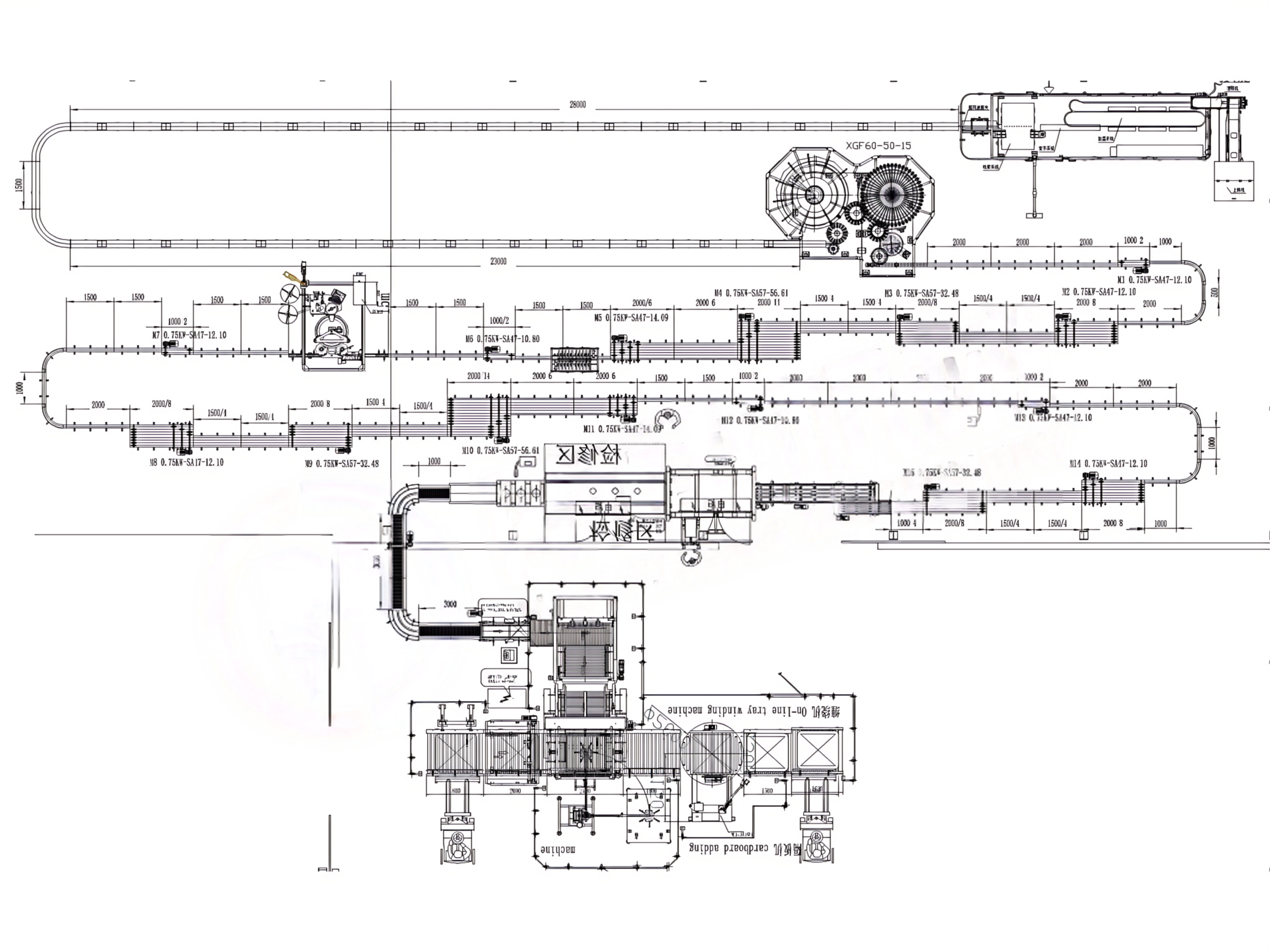
Market Growth: The global bottled water market is projected to surpass USD 400 billion by 2030, driven by rising health consciousness and demand for safe drinking water.
Smart Bottling Lines: IoT-enabled monitoring and predictive maintenance are becoming standard, reducing downtime.
Sustainability Push: Lightweight PET bottles, recyclable materials, and water-saving filling valves are major focus areas.
Shift Toward Flexibility: Manufacturers increasingly design multi-format machines that can handle PET, glass, and aluminum cans in one line.
Emerging Markets: Africa, South Asia, and the Middle East will see the fastest growth, with high demand for 2000–12,000 BPH lines that balance cost and performance.
Frequently Asked Questions About Water Bottling Machine Manufacturers
How do I choose the best water bottling machine manufacturer?
The best water bottling machine manufacturer should have proven industry experience, reliable equipment quality, professional engineering capabilities, and responsive after-sales service.
Before selecting a supplier, evaluate its completed projects, manufacturing facilities, quality certifications, customer references, spare-parts support, and ability to provide a customized water bottling line layout.
A qualified supplier should also understand water treatment, PET bottle blowing, filling, capping, labeling, packaging, and production-line integration rather than offering only an individual filling machine.
What equipment is included in a complete water bottling line?
A complete water bottling line normally includes a water treatment system, bottle blowing machine, air conveyor, bottle rinsing filling and capping machine, labeling machine, date coding system, packaging machine, and finished-bottle conveyor.
Depending on the project requirements, the line may also include a preform feeding system, automatic bottle unscrambler, cap elevator, palletizer, carton packing machine, CIP system, air compressor, and laboratory equipment.
Professional water bottling equipment manufacturers can integrate these machines into one coordinated turnkey bottling solution.
What production capacity should I choose for a bottled water plant?
The correct production capacity depends on your target market, bottle sizes, daily working hours, distribution network, available factory space, and investment budget.
Small startup plants often select water bottling machines with an output of approximately 1,000 to 3,000 bottles per hour, while growing regional producers commonly choose 4,000 to 12,000 BPH lines.
Large beverage companies may require high-speed automatic water filling lines producing 18,000, 24,000, or more bottles per hour.
It is advisable to reserve additional capacity for future market growth instead of designing the plant only for current sales volume.
How much does a water bottling machine cost?
The price of a water bottling machine varies according to production speed, automation level, bottle format, machine configuration, component brands, manufacturing standards, and after-sales services.
A basic semi-automatic bottling system requires a lower initial investment, while a complete automatic water bottling plant with water treatment, bottle blowing, filling, labeling, and packaging equipment costs significantly more.
Shipping, installation, factory utilities, molds, spare parts, raw materials, and local taxes should also be included when calculating the total water bottling plant cost.
Buyers should compare the complete scope of supply rather than choosing a manufacturer solely according to the lowest machine price.
For more information, read: water bottling plant cost in 2026
What is the difference between a standalone water filling machine and a turnkey bottling line?
A standalone water filling machine performs the core rinsing, filling, and capping processes but normally does not include upstream or downstream equipment.
A turnkey water bottling line combines water purification, PET bottle production, filling, labeling, coding, conveying, and final packaging into one integrated production system.
Turnkey solutions reduce compatibility risks because the complete line is designed according to the same bottle specifications, production speed, utility conditions, and factory layout.
They are generally more suitable for investors who want a complete bottled water production plant from one supplier.
Should I choose a semi-automatic or fully automatic water bottling machine?
A semi-automatic water bottling machine is suitable for startups with limited budgets, lower production demand, and sufficient local labor.
A fully automatic water bottling machine requires a higher initial investment but offers greater production efficiency, lower labor requirements, more consistent bottle quality, and easier production management.
Automatic bottling lines are particularly valuable when labor costs are high, hygiene control is important, or the business plans to expand into supermarkets and large distribution networks.
The final choice should be based on total operating cost and expected production growth, not only the initial equipment price.
Can one water bottling line handle different bottle sizes?
Yes, many modern water bottling lines can process multiple PET bottle sizes by changing bottle guides, star wheels, filling parameters, label settings, molds, and packaging formats.
Common production ranges include small bottles such as 200 ml, 330 ml, and 500 ml, as well as larger formats such as 1 liter, 1.5 liters, and 2 liters.
However, the achievable production speed may decrease when larger bottles are used because they require more filling volume and additional conveying space.
The water bottling machine supplier should receive all bottle drawings and samples before confirming the final line design.
What information should I provide when requesting a water bottling machine quotation?
To obtain an accurate quotation, provide the required production capacity in bottles per hour, bottle volumes, bottle material, cap type, label type, packaging method, raw-water analysis, factory dimensions, electrical standard, and destination port.
You should also indicate whether you need a complete water treatment and bottling system or only selected machines.
Information about future bottle formats, local labor costs, available compressed air, water supply, and factory construction progress will help the manufacturer recommend a more practical solution.
A detailed request allows the supplier to prepare an accurate machine configuration, utility list, line layout, and investment estimate.
Why is after-sales service important when selecting a bottling machine supplier?
Reliable after-sales service helps reduce installation risks, production downtime, maintenance costs, and operator errors throughout the working life of the bottling equipment.
A responsible water bottling machine supplier should provide installation guidance, commissioning support, operator training, operation manuals, electrical drawings, maintenance instructions, and spare-parts recommendations.
Remote technical support and the availability of service engineers are especially important for overseas bottled water projects.
Before placing an order, buyers should confirm the warranty period, service scope, engineer charges, spare-parts delivery time, and technical communication process.
What certifications and quality standards should a water bottling machine manufacturer have?
Water bottling machinery should be manufactured according to recognized electrical, mechanical, hygiene, and food-contact standards applicable to the destination market.
Buyers commonly review CE compliance, food-grade stainless-steel materials, electrical safety design, hygienic welding, and component documentation.
The product-contact sections of the filling machine are normally made from food-grade stainless steel, while reputable international brands may be used for PLCs, touchscreens, motors, sensors, pumps, and pneumatic components.
Certificates should be evaluated together with factory inspection, equipment testing, technical drawings, and actual project experience.
How can I compare water bottling machine manufacturers from different countries?
Manufacturers should be compared according to technical capability, total project cost, customization, component quality, energy consumption, production efficiency, service coverage, and long-term operating expenses.
European water bottling equipment manufacturers are often associated with high-speed automation and advanced engineering, while Chinese manufacturers may offer competitive factory-direct pricing, flexible customization, and complete turnkey water bottling plants for emerging markets.
North American suppliers frequently provide modular and small-to-medium-capacity bottling systems suitable for local producers and startups.
The most suitable country of origin depends on your capacity requirements, investment level, local technical resources, and expected return on investment.
How much factory space is required for a water bottling plant?
The required factory area depends mainly on production capacity, automation level, equipment configuration, storage needs, and workshop layout.
A small water bottling plant typically requires 200–500 m², a medium-capacity plant around 1,000 m², and a high-capacity automatic plant usually 2,000 m² or more.
The space should cover water treatment, bottle blowing, filling, packaging, utilities, storage, quality control, and material-handling areas. A detailed workshop drawing helps the supplier design an efficient layout and minimize unnecessary conveyor length.
How long does it take to manufacture and install a water bottling line?
The manufacturing time for a water bottling line is typically 45 to 90 days, depending on the production capacity, automation level, bottle specifications, machine configuration, and degree of customization.
Small and medium-capacity lines generally require around 45 to 60 days, while high-speed or fully customized turnkey water bottling lines may take 60 to 90 days for engineering design, component procurement, assembly, programming, testing, and factory acceptance.
On-site installation and commissioning usually take 30 to 90 days, depending on the line size, factory conditions, utility readiness, local labor support, and installation scope.
To avoid delays, the buyer should complete the factory layout, bottle and label design, electrical supply, water supply, drainage, compressed air system, and other utility preparations before the equipment arrives.
What tests should be completed before a water bottling machine is shipped?
A professional manufacturer should conduct machine inspection and factory acceptance testing before shipment.
The test should verify filling accuracy, bottle transfer stability, capping quality, label positioning, production speed, safety devices, electrical controls, and communication between connected machines.
Whenever possible, testing should use the buyer’s actual bottles, caps, labels, preforms, and packaging materials.
The supplier should provide test videos, equipment checklists, technical documents, and confirmation of any modifications completed before delivery.
Conclusion
The Top 25 Water Bottling Machine Manufacturers in 2026 represent the best partners for water producers worldwide. Whether you are a startup or a multinational brand, these manufacturers offer the technology, service, and reliability to build a successful bottled water business.

 العربية
 English
 Français
 Русский
 Español
 Português
 Tiếng Việt
 ไทย
ไทย Polski
 Türkçe
 አማርኛ
አማርኛ ဗမာစာ
ဗမာစာ தமிழ்
தமிழ் Filipino
 Bahasa Indonesia
 magyar
 Română
 қазақ
қазақ हिन्दी
 فارسی
فارسی Kiswahili
 українська
 Հայերեն
 עברית
עברית বাংলা
বাংলা සිංහල
සිංහල Oʻzbekcha
 Azərbaycan dili
 Български
 ქართული
 guarani
 ગુજરાતી
 Hausa
Hausa Igbo
Igbo ಕನ್ನಡ
ಕನ್ನಡ Kinyarwanda
 Kurdî
Kurdî Кыргызча
 Oluganda
 മലയാളം
 मराठी
मराठी Afaan Oromoo
 ਪੰਜਾਬੀ
 Runasimi
 chiShona
 Soomaali
 Тоҷикӣ
 తెలుగు
 ትግንያውያን
 Türkmençe
 Yorùbá
 isiZulu