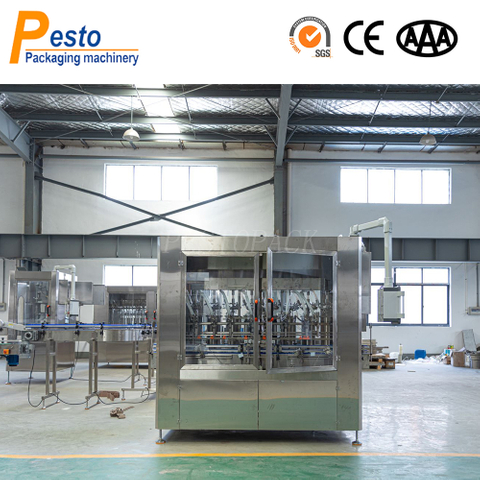
Linear Filling Machine
Linear Filling Machine | Automatic Inline Liquid Filling Solutions
Explore linear filling machines for water, oil, chemicals, cosmetics, and liquid packaging. Inline filling systems with high accuracy, flexible configuration, and scalable production.
Linear Filling Machine – High-Precision Inline Filling Solutions for Modern Production Lines
In today’s competitive manufacturing environment, accuracy, flexibility, and scalability are no longer optional — they are essential. A Linear Filling Machine, also known as an inline filling machine, is designed to meet these exact demands, offering precise liquid filling for a wide range of products while maintaining a compact footprint and easy operation.
Whether you are filling water, edible oil, lubricants, chemicals, cosmetics, or daily-use liquids, linear filling machines provide a reliable and cost-effective solution for both growing factories and large-scale industrial producers.
This page serves as a complete product category guide for linear filling machines — helping you understand how they work, where they are used, what types are available, and how to choose the right model for your production needs.
What Is a Linear Filling Machine?
A Linear Filling Machine, also known as an inline filling machine, is an automatic or semi-automatic liquid filling system in which containers move in a straight line along a conveyor and are filled sequentially by multiple filling heads.
This linear, straight-through design allows precise volume control while keeping the machine structure simple, flexible, and easy to scale. Compared with rotary filling machines that rely on circular indexing, linear filling machines are easier to operate, maintain, upgrade, and integrate into existing production lines — especially for factories handling multiple products or frequent bottle changes.
From water and edible oil to chemicals, lubricants, and daily liquid products, linear filling machines are widely used by manufacturers who need accurate filling, fast changeover, and cost-effective automation.
Key Characteristics of Linear Filling Machines
Straight-Line (Inline) Container Movement
Bottles move continuously or step-by-step in a straight path, making the filling process stable, predictable, and easy to synchronize with downstream equipment such as capping and labeling machines.
Multiple Filling Heads in a Linear Arrangement
Filling heads are installed in a row, allowing the machine to increase capacity simply by adding more heads — a major advantage for scalable production planning.
Optimized for Low to Medium Production Speeds
Linear filling machines are ideal for low to medium output ranges, where accuracy, consistency, and flexibility are more critical than ultra-high speed.
High Flexibility for Bottle Sizes and Shapes
Unlike rotary systems that often require dedicated molds or star wheels, linear filling machines can handle different bottle diameters, heights, and shapes with minimal adjustment.
Ideal for Frequent Product Changeovers
Recipe-based control systems, simple mechanical adjustments, and open machine structures make linear filling machines perfect for factories producing multiple SKUs or changing products regularly.
Why Choose a Linear Filling Machine Instead of a Rotary One?
While rotary filling machines dominate very high-speed bottling lines, linear filling machines are often the smarter choice for most manufacturers — especially those requiring flexibility, accuracy, and controlled investment.
Linear vs Rotary Filling Machines – Core Differences
Investment cost: Linear machines are significantly more affordable
Changeover: Faster and easier with linear systems
Maintenance: Fewer moving parts, lower downtime
Customization: Easier to tailor for specific products
Space requirement: Compact and workshop-friendly
For startups, expanding factories, or multi-product producers, a linear filling machine often delivers a better return on investment.
How Does a Linear Filling Machine Work?
A linear filling machine works through a precisely coordinated inline process designed to deliver accurate liquid dosing, stable bottle handling, and consistent production output.
Containers move along a straight conveyor path, while the filling system synchronizes bottle positioning, nozzle movement, and volume control in real time.
This working principle makes inline filling machines especially suitable for water filling, oil bottling, chemical filling, cosmetic liquids, and daily-use products, where accuracy and flexibility are critical.
https://www.youtube.com/watch?v=eWbmmNvmzmM
https://www.youtube.com/watch?v=C3ut0kcqDIo
https://youtu.be/UFnyAz8zqmA?si=956xKw_03jXNr1FL
https://youtu.be/DZvehiyiVeU?si=7mR8g9UCk0YdwScZ
Step-by-Step Working Principle of a Linear Filling Machine
1. Bottle Feeding and Conveyor Transport
Empty bottles or containers are automatically fed onto the conveyor system. The inline conveyor ensures stable, straight-line movement and smooth bottle spacing, which is essential for accurate filling and downstream packaging equipment.
2. Bottle Positioning Under Filling Heads
Sensors detect each container and position it precisely under the filling heads. This step guarantees consistent alignment, even when handling different bottle sizes or shapes.
3. Filling Nozzle Alignment or Descent
Depending on the filling configuration, nozzles either descend into the bottle neck or align closely with the bottle opening. This design helps reduce splashing, foaming, and liquid loss — especially important for water, edible oil, and chemical filling applications.
4. Accurate Liquid Dispensing
Liquid is dispensed according to a preset filling volume using magnetic pumps, piston systems, or flow meters. The filling volume is controlled digitally, ensuring high accuracy and repeatability across all filling heads.
5. Anti-Drip Nozzle Closing
Once the target volume is reached, the nozzles close instantly with anti-drip or suck-back functions to prevent dripping, stringing, or contamination between bottles.
6. Bottle Discharge to the Next Station
Filled bottles are released from the filling zone and transferred smoothly to the next packaging process, such as automatic capping, labeling, coding, induction sealing, or carton packing.
Advanced Control Systems for Stable Inline Filling
Modern linear filling machines are equipped with servo motors, PLC control systems, and touchscreen HMI panels, allowing operators to manage the entire filling process with precision.
Key Control Features
Servo-driven filling control for higher accuracy
PLC-based automation for stable and repeatable operation
Recipe memory for fast product and volume changeover
Digital parameter adjustment for different liquids and containers
These advanced features make linear filling machines ideal for multi-product production lines, where frequent switching between different filling volumes, bottle types, and liquid viscosities is required.
Types of Linear Filling Machines by Filling Technology
Choosing the right filling technology is one of the most important decisions when selecting a linear filling machine.
Different liquids require different filling principles to ensure accuracy, stability, hygiene, and long-term reliability.
Linear filling machines can be classified based on the liquid dosing system they use. Each filling technology is optimized for specific viscosities, container types, and production requirements.
Magnetic Pump Linear Filling Machine
A magnetic pump linear filling machine uses magnetically coupled pumps to transfer liquid from the tank to the filling nozzles without direct mechanical contact between the motor and the liquid.
This inline filling solution is widely used for low- to medium-viscosity liquids, especially where chemical resistance and clean operation are required.
Typical Applications
Drinking water filling lines
Chemical liquid filling machines
Disinfectant and sanitizer filling
Lubricant oil bottling lines
Pesticide and agrochemical packaging
Key Advantages
High filling accuracy and consistency
No mechanical seal contact with liquid
Reduced risk of leakage or contamination
Easy cleaning and low maintenance
Ideal for corrosive or sensitive liquids
https://youtu.be/AbUlrZegE9k?si=vKZvdHdOtX-mbMb3
Piston Linear Filling Machine
A piston linear filling machine uses volumetric piston cylinders to draw and dispense a fixed amount of liquid into each container, making it ideal for high-viscosity and thick products.
This filling technology is commonly used in food, cosmetic, and detergent industries where product density varies.
Typical Applications
Sauce and ketchup filling machines
Honey and syrup bottling lines
Cream, lotion, and cosmetic filling
Liquid detergent and gel packaging
Key Advantages
Excellent accuracy for viscous liquids
Stable and repeatable filling volumes
Strong adaptability to viscosity changes
Reliable performance for non-free-flowing products
https://youtu.be/REVzDxrOhsg?si=_PtXiL9sqeWCAtXb
Flow Meter Linear Filling Machine
A flow meter linear filling machine measures liquid volume electronically in real time during the filling process. Instead of relying on time or piston stroke, the system ensures precise volume control through digital flow measurement.
This technology is widely used for oil filling and industrial liquid packaging.
Typical Applications
Edible oil filling machines
Cooking oil bottling lines
Fuel additives and lubricants
Industrial liquid filling systems
Key Advantages
Real-time electronic volume measurement
High repeatability and accuracy
Ideal for medium to large filling volumes
Less affected by temperature or viscosity variation
Gravity Linear Filling Machine
A gravity linear filling machine uses liquid weight and natural flow to fill containers. This is the simplest filling principle and is suitable for free-flowing, low-viscosity liquids.
Gravity filling machines are often chosen for entry-level bottling lines or cost-sensitive projects.
Typical Applications
Key Advantages
Simple and reliable machine structure
Low investment and operating cost
Easy operation and maintenance
Suitable for small-scale production
https://youtu.be/DZvehiyiVeU?si=7mR8g9UCk0YdwScZ
Weighing Linear Filling Machine
A weighing linear filling machine, also known as a weight-based filling machine, fills containers by measuring the actual liquid weight in real time during the filling process.
Instead of relying on time or volume, this system ensures high filling accuracy by controlling the target weight for each container.
Weighing filling technology is especially suitable for applications where high accuracy, product cost control, and compliance with net weight regulations are critical.
Typical Applications
Edible oil and cooking oil packaging
Chemical liquid filling
Lubricant and industrial oil filling
High-value liquid products
Key Advantages
High filling accuracy based on real-time weight measurement
Less affected by liquid viscosity or temperature changes
Ideal for high-value or regulated products
Reduced product giveaway and improved cost control
https://www.youtube.com/watch?v=85dCSA6WPos
How to Choose the Right Filling Technology
When selecting a linear filling machine, the filling system should match your liquid properties and production goals, not just the price.
Key Selection Factors
Liquid viscosity and flow behavior
Required filling accuracy
Container size and material
Production capacity and future expansion
Cleaning and hygiene requirements
Choosing the correct filling technology ensures stable operation, minimal product waste, and long-term production efficiency.
Types of Linear Filling Machines by Automation Level
Linear filling machines can also be classified by their level of automation, which directly affects production efficiency, labor requirements, and overall investment cost.
From manual-assisted solutions for startups to fully automated inline filling systems for continuous production, choosing the right automation level ensures your filling line matches both current capacity needs and future growth plans.
Semi-Automatic Linear Filling Machine
A semi-automatic linear filling machine is designed for small workshops, pilot plants, and early-stage manufacturers. Bottles or containers are placed manually under the filling heads, while the machine controls liquid dosing and filling accuracy.
This type of inline filling equipment provides a balance between manual operation and automated filling control, making it an ideal entry-level solution.
Best For
Small production volumes and short production runs
Pilot projects and product testing
Budget-limited factories and startups
Frequent product or container changes
Key Benefits
Lower initial investment
Simple structure and easy operation
Accurate liquid filling with minimal automation
Suitable for a wide range of liquids and containers
Fully Automatic Linear Filling Machine
A fully automatic linear filling machine integrates automatic bottle feeding, inline filling, and bottle discharge into a continuous production process. Bottles move through the filling zone without manual intervention, ensuring stable output and consistent quality.
These automatic inline filling systems are widely used in medium-scale production lines and factories aiming for higher efficiency and reduced labor costs.
Best For
Medium-scale factories and growing manufacturers
Continuous and high-efficiency production
Applications requiring high filling consistency
Integration with automatic capping, labeling, and packing lines
Key Benefits
Fully automated bottle handling and filling process
Higher production efficiency and stable output
Reduced labor dependency and operational cost
Easy integration into complete filling and packaging lines
How to Choose the Right Automation Level
When selecting between semi-automatic and fully automatic linear filling machines, manufacturers should consider:
Daily and hourly production targets
Labor availability and cost
Product variety and changeover frequency
Planned line expansion and automation upgrades
Choosing the correct automation level helps maximize return on investment, production stability, and long-term scalability.
Industries That Use Linear Filling Machines
Linear filling machines are among the most versatile and widely used liquid filling solutions across global manufacturing industries.
Thanks to their inline structure, high filling accuracy, and strong adaptability, these machines can handle a broad range of liquids, container types, and production scales.
From food and beverages to chemicals and pharmaceuticals, linear filling machines are trusted by manufacturers who need reliable, flexible, and scalable filling systems.
Water & Beverage Industry
Linear filling machines are commonly used in water bottling plants and beverage production lines, especially where flexibility and hygiene are essential.
Typical Products
Bottled drinking water
Purified and mineral water
Juice and fruit beverages
Functional drinks and flavored water
Why linear filling machines work well:
Stable inline bottle handling, easy cleaning, and compatibility with capping and labeling systems.
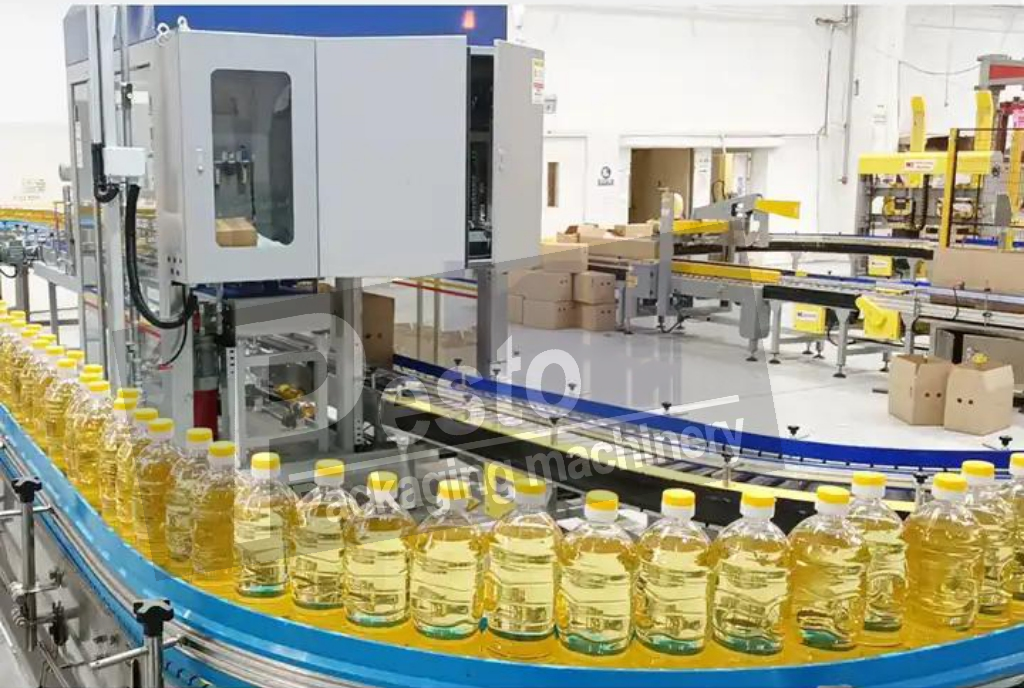
Edible Oil Industry
For edible oil packaging, linear filling machines provide accurate dosing and clean filling, even for slightly viscous liquids.
Typical Products
Cooking oil
Olive oil
Sunflower oil
Soybean and palm oil
Lubricant & Automotive Fluids Industry
Linear filling machines are widely used in lubricant oil filling lines, where accuracy and drip control are critical.
Typical Products
Engine oil
Gear oil
Hydraulic oil
Transmission fluids
Chemical Industry
In the chemical sector, linear filling machines are valued for their chemical-resistant materials and precise volume control.
Typical Products
增加图文链接
Cosmetics & Personal Care Industry
Cosmetic and personal care manufacturers rely on linear filling machines for both liquid and semi-viscous products.
Typical Products
增加图文链接
Pharmaceutical & Healthcare Industry
With proper configuration, linear filling machines can be used for non-sterile pharmaceutical and healthcare liquids.
Typical Products
Syrups and oral liquids
Disinfectant solutions
Medical cleaning fluids
增加图文链接
Food & Sauce Processing Industry
For food manufacturers handling viscous or semi-viscous products, linear filling machines provide stable and hygienic filling.
Typical Products
Sauces and ketchup
Honey and syrup
Condiments and dressings
增加图文链接
Agricultural & Agrochemical Industry
Linear filling machines are also used for agricultural chemicals and crop protection products.
Typical Products
Pesticides
Herbicides
Liquid fertilizers
增加图文链接
Household & Industrial Cleaning Products
Many factories use linear filling machines for daily-use and industrial cleaning liquids.
Typical Products
Detergents
Floor cleaners
Dishwashing liquids
Industrial cleaners
增加图文链接
Common Bottle Types Supported by Linear Filling Machines
One of the key advantages of a linear filling machine is its exceptional container compatibility.
Thanks to the inline structure and adjustable filling heads, linear filling machines can handle a wide variety of container materials, sizes, and shapes with minimal mechanical changeover.
This flexibility makes inline filling systems ideal for manufacturers producing multiple SKUs, customized packaging, or different container formats within the same production line.
Supported Container Types
PET Bottles
Linear filling machines are widely used for filling PET bottles in water bottling, beverage, edible oil, and personal care production lines. Adjustable guides and filling nozzles allow quick switching between different bottle diameters and heights.
HDPE Bottles
HDPE containers are commonly used for chemicals, detergents, lubricants, and household cleaning products. Linear filling machines can be configured with corrosion-resistant materials and anti-drip nozzles for safe and clean filling.
Glass Bottles
With proper bottle handling and stable conveyor design, linear filling machines can also fill glass bottles used for beverages, edible oils, sauces, and cosmetic liquids.
Jerry Cans
For medium to large volume packaging, linear filling machines are suitable for jerry cans commonly used in oil, chemical, and industrial liquid applications.
Small Vials and Containers
Linear filling machines can be configured for small bottles, vials, and narrow-neck containers, making them suitable for cosmetics, healthcare liquids, and specialty chemical products.
Large Drums and Containers
For industrial use, linear filling machines can be adapted for large drums and bulk containers, using reinforced frames, higher-capacity pumps, and specialized filling nozzles.
Easy Changeover for Different Bottle Shapes
Changing bottle shapes or sizes on a linear filling machine usually requires only simple mechanical adjustments, such as:
This quick changeover capability minimizes downtime and makes linear filling machines ideal for customized production, contract manufacturing, and multi-product filling lines.
Production Capacity of Linear Filling Machines
Linear filling machines are available in a wide range of production capacities, making them suitable for small workshops, growing factories, and medium-scale industrial production lines.
Thanks to their modular inline design, production output can be adjusted by changing the number of filling heads, filling technology, and automation level, allowing manufacturers to match capacity precisely to their operational needs.
Typical Capacity Range
Small-Scale Production: 500 – 1,000 BPH
This capacity range is ideal for startups, pilot projects, and low-volume production lines.
Commonly used with semi-automatic or entry-level automatic filling machines
Suitable for small bottle sizes and short production runs
Lower investment and operating cost
LSI keywords covered:
small scale filling machine, low capacity filling equipment
Medium-Scale Production: 1,500 – 3,000 BPH
This is the most common capacity range for commercial liquid filling operations.
Ideal for water, edible oil, cosmetic, and chemical filling lines
Balanced efficiency and flexibility
Easy integration with automatic capping and labeling machines
LSI keywords covered:
automatic linear filling machine, medium speed filling line
High-Configuration Models: Up to 6,000 BPH
High-configuration linear filling machines are designed for higher output requirements while maintaining inline flexibility.
Equipped with multiple filling heads
Fully automatic operation
Suitable for continuous production and standardized packaging
LSI keywords covered:
high speed linear filling machine, inline bottle filling system
Factors That Affect Production Capacity
Actual production output depends on several key variables. Understanding these factors helps set realistic expectations and choose the right configuration.
Number of Filling Heads
Increasing the number of filling heads directly increases production capacity. Linear filling machines can be easily upgraded by adding more filling heads as demand grows.
Filling Volume
Larger filling volumes require longer filling time, which may reduce bottles per hour. Smaller volumes allow higher output rates.
Liquid Characteristics
Viscosity, foaming tendency, and temperature of the liquid all affect filling speed. Free-flowing liquids typically achieve higher capacities than viscous products.
Automation Level
Fully automatic linear filling machines deliver higher and more stable output compared to semi-automatic models, especially in continuous production environments.
Key Features of Modern Linear Filling Machines
Modern linear filling machines are designed to meet the demands of today’s liquid packaging industry, where accuracy, efficiency, hygiene, and long-term reliability are essential.
By combining advanced control systems with robust mechanical design, inline filling machines deliver stable performance across a wide range of applications.
High Filling Accuracy and Consistent Dosing
High-end linear filling machines use servo-driven control systems and advanced liquid dosing technology to ensure precise and repeatable filling volumes across all filling heads.
This high level of accuracy is especially important for water filling machines, oil bottling lines, chemical filling systems, and cosmetic liquid packaging, where consistency directly impacts product quality and cost control.
Easy Operation with Touchscreen HMI
A user-friendly touchscreen HMI (Human-Machine Interface) allows operators to control and monitor the entire filling process with minimal training.
Key parameters such as filling volume, filling speed, and bottle settings can be adjusted quickly, improving operational efficiency and reducing human error.
Fast Changeover and Recipe Memory
Modern linear filling machines are equipped with recipe memory functions, enabling operators to save and recall multiple filling parameters.
This feature significantly reduces downtime during product or bottle changeovers, making inline filling machines ideal for multi-product production lines and contract manufacturing operations.
Stable and Durable Machine Structure
Linear filling machines are built with heavy-duty stainless steel frames designed for continuous industrial operation.
The rigid structure ensures long service life, stable filling performance, and minimal vibration — even in high-output configurations.
Hygienic Design and Food-Grade Construction
For food, beverage, and personal care applications, linear filling machines can be manufactured with food-grade materials and hygienic design principles.
Options such as CIP-ready structures, smooth internal surfaces, and sanitary fittings help meet hygiene standards and simplify cleaning procedures.
Integration with Complete Filling Lines
A linear filling machine is designed to function as the core unit of a complete liquid packaging line.
Thanks to its inline structure and modular design, it can be seamlessly integrated with a wide range of upstream and downstream packaging equipment, forming a fully automated and efficient production line.
This integration capability makes linear filling machines ideal for manufacturers looking to build or upgrade automatic filling and packaging lines with flexibility and scalability.
Automatic Capping Machine Integration
Linear filling machines can be synchronized with automatic capping machines, including screw cappers, press cappers, and tracking capping systems.
Precise bottle positioning and stable conveyor transfer ensure smooth cap placement and reliable torque control for different bottle and cap types.
Labeling Machine Integration
Inline filling machines are fully compatible with automatic labeling machines, such as:
Round bottle labeling machines
Front and back labeling systems
Wrap-around labeling machines
Accurate bottle spacing from the filling machine ensures consistent label positioning and high labeling accuracy.
Coding and Marking System Integration
Linear filling machines can be integrated with coding and marking systems for product traceability and regulatory compliance.
Common systems include:
Induction Sealing Machine Integration
For enhanced product safety and shelf life, linear filling machines can be combined with aluminum foil induction sealing machines.
This setup is widely used in edible oil, pharmaceutical, chemical, and personal care packaging lines.
Shrink Wrapping and Carton Packing Integration
Downstream packaging equipment such as shrink wrapping machines and carton packing systems can be seamlessly connected to the filling line.
This allows bottles to move automatically from filling and capping to secondary packaging, improving overall line efficiency.
How to Choose the Right Linear Filling Machine
Choosing the right linear filling machine is not just about machine price or speed — it is about matching the equipment to your actual production requirements, liquid characteristics, and long-term business goals.
A properly selected inline filling machine improves filling accuracy, reduces downtime, and ensures your production line remains scalable as demand grows.
Key Questions to Ask Before Selecting a Linear Filling Machine
What Is the Liquid Viscosity and Flow Behavior?
Different liquids require different filling technologies. Free-flowing liquids such as water need a different solution than viscous products like oils, detergents, or creams.
Selecting the correct filling system — magnetic pump, piston, flow meter, or gravity filling, weighing filling — is critical for stable performance and accurate dosing.
What Is the Target Production Capacity?
Define your required output in bottles per hour (BPH). This helps determine:
Number of filling heads
Automation level
Conveyor speed
Choosing a machine with scalable capacity ensures your filling line can grow without major reinvestment.
What Bottle Sizes and Shapes Are Used?
Consider the full range of containers you plan to fill, including:
Bottle height and diameter
Container material (PET, HDPE, glass)
Special shapes or neck finishes
Linear filling machines are highly flexible, but understanding container variation ensures smooth changeover and stable operation.
How Often Do You Change Products or SKUs?
Factories producing multiple products benefit from machines with:
If frequent changeover is required, an inline filling machine with fast setup features is essential.
Do You Need Food-Grade or Chemical-Resistant Materials?
Material selection affects safety, compliance, and machine lifespan.
Choosing the correct construction materials ensures long-term reliability and regulatory compliance.
Linear Filling Machine Customization Options
Modern linear filling machines are designed with a high degree of customization flexibility, allowing manufacturers to configure equipment precisely according to their product characteristics, production environment, and long-term capacity plans.
Customization is not just an option — it is essential to ensure stable filling accuracy, operational safety, and optimal performance in real production conditions.
Filling Head Quantity Configuration
The number of filling heads directly affects production capacity. Linear filling machines can be configured with multiple filling heads, and upgraded later as output requirements increase.
This modular approach allows manufacturers to start with a lower investment and scale up production efficiently.
Servo-Controlled or Pneumatic Filling Systems
Depending on the required filling accuracy and budget, linear filling machines can be equipped with:
Servo control is ideal for applications requiring precise volume control and frequent changeovers, while pneumatic systems suit simpler production needs.
Anti-Drip and Suck-Back Nozzles
To prevent dripping, stringing, and cross-contamination, linear filling machines can be equipped with anti-drip or suck-back filling nozzles.
These nozzle designs are especially important for oil filling machines, chemical filling lines, and viscous liquid packaging, where clean filling is critical.
Heating or Insulation Systems
For liquids that require temperature control, such as viscous oils or syrups, linear filling machines can include:
These options ensure stable liquid flow and consistent filling accuracy.
Explosion-Proof Configuration
For flammable or volatile liquids, linear filling machines can be customized with explosion-proof electrical components and safety systems.
This configuration is commonly used in chemical, solvent, and industrial liquid filling applications.
Corrosion-Resistant Materials
For aggressive or corrosive liquids, machines can be manufactured using corrosion-resistant materials, such as specialized stainless steel grades or chemical-resistant components.
This ensures long-term reliability and reduced maintenance in harsh production environments.
LSI keywords covered:
corrosion resistant filling machine, chemical filling system
Maintenance and Long-Term Reliability of Linear Filling Machines
One of the major reasons manufacturers choose a linear filling machine is its reputation for low maintenance requirements and long-term operational reliability.
Compared with more complex filling systems, inline filling machines feature a simple structure, fewer moving parts, and easy access to key components — all of which help reduce downtime and maintenance costs.
Easy Access to Components
Linear filling machines are designed with an open inline layout, allowing maintenance staff to quickly access filling heads, pumps, valves, and sensors.
This simplifies routine inspection, troubleshooting, and part replacement, even during daily production schedules.
Simple and Efficient Cleaning Procedures
Cleaning is straightforward thanks to:
These features are especially important for food, beverage, cosmetic, and chemical filling lines, where hygiene and contamination control are critical.
Low Spare Parts and Service Cost
Linear filling machines use standardized components, resulting in:
This makes them cost-effective for long-term operation.
Minimal Downtime and Stable Operation
Thanks to their simple mechanical structure and reliable control systems, linear filling machines experience fewer breakdowns and faster recovery times.
This ensures stable daily output and predictable production planning.
Long-Term Reliability and Service Life
With proper preventive maintenance — such as regular cleaning, lubrication, and inspection — a high-quality linear filling machine can operate reliably for many years, even in demanding industrial environments.
Durable stainless steel frames, high-quality pumps, and proven control components all contribute to extended service life and consistent filling performance.
Why Choose Pestopack as Your Linear Filling Machine Manufacturer
Choosing the right linear filling machine manufacturer is just as important as selecting the machine itself. Pestopack Machinery is a trusted global supplier of linear filling machines and complete liquid packaging solutions, serving manufacturers across water, edible oil, chemical, cosmetic, and daily-use liquid industries.
With years of engineering experience, Pestopack designs and manufactures inline filling machines that combine high filling accuracy, flexible configuration, and long-term reliability. Each linear filling machine is built with industrial-grade components, modern control systems, and a modular structure — ensuring stable operation, easy maintenance, and future scalability.
Engineering-Driven Design, Not Just Assembly
Unlike trading companies, Pestopack focuses on in-house design, manufacturing, and system integration.
This allows precise customization based on:
Liquid viscosity and product behavior
Required production capacity and automation level
Bottle types, sizes, and packaging formats
Local operating conditions and industry standards
Complete Filling Line Solutions from One Source
Pestopack does not only supply standalone filling machines. The company provides complete linear filling lines, integrating:
Linear liquid filling machines
Automatic capping and labeling systems
Coding, induction sealing, and end-of-line packaging
This turnkey capability reduces coordination risk, shortens project timelines, and ensures smooth line compatibility.
Global Projects, Local Understanding
Pestopack linear filling machines are installed in multiple international markets, supporting customers with different regulations, packaging habits, and production scales.
This global experience helps customers avoid common startup mistakes and choose the right configuration from day one.
Reliable Support for Long-Term Operation
From machine selection and layout design to commissioning and after-sales support, Pestopack focuses on long-term customer success, not just machine delivery.
This commitment makes Pestopack a reliable partner for manufacturers looking to build stable, scalable, and competitive liquid filling operations.
Conclusion: Linear Filling Machines as a Smart Production Choice
A linear filling machine is far more than a simple liquid filling device — it is a strategic production solution for manufacturers seeking long-term efficiency, flexibility, and scalability.
With high filling accuracy, modular inline design, and cost-effective automation, linear filling machines offer a balanced approach between performance and investment.
Compared with more complex systems, inline filling machines provide easier operation, faster changeover, and lower total cost of ownership, making them ideal for both growing factories and established production facilities.
A Versatile Solution Across Multiple Industries
Whether you operate in:
Water bottling and beverage production
Edible oil and cooking oil packaging
Chemical and detergent filling lines
Cosmetic and personal care manufacturing
a well-designed linear liquid filling machine can significantly improve production efficiency, reduce product waste, and ensure consistent filling quality across different container types and liquid viscosities.
Built for Growth and Long-Term Performance
Thanks to their scalable configuration, customizable filling technology, and reliable mechanical structure, linear filling machines support long-term business growth without requiring complete line replacement.
Manufacturers can start with a basic configuration and upgrade automation, capacity, or integration as production demands increase — protecting investment and improving operational flexibility.
The Smart Starting Point for Liquid Packaging Lines
If you are planning to build a new liquid packaging line or upgrade an existing filling system, a linear filling machine is often the smartest and most practical place to start.
Its adaptability, reliability, and cost efficiency make it a proven solution for modern liquid packaging operations worldwide.

 العربية
 English
 Français
 Русский
 Español
 Português
 Tiếng Việt
 ไทย
ไทย Polski
 Türkçe
 አማርኛ
አማርኛ ဗမာစာ
ဗမာစာ தமிழ்
தமிழ் Filipino
 Bahasa Indonesia
 magyar
 Română
 қазақ
қазақ हिन्दी
 فارسی
فارسی Kiswahili
 українська
 Հայերեն
 עברית
עברית বাংলা
বাংলা සිංහල
සිංහල Oʻzbekcha
 Azərbaycan dili
 Български
 ქართული
 guarani
 ગુજરાતી
 Hausa
Hausa Igbo
Igbo ಕನ್ನಡ
ಕನ್ನಡ Kinyarwanda
 Kurdî
Kurdî Кыргызча
 Oluganda
 മലയാളം
 मराठी
मराठी Afaan Oromoo
 ਪੰਜਾਬੀ
 Runasimi
 chiShona
 Soomaali
 Тоҷикӣ
 తెలుగు
 ትግንያውያን
 Türkmençe
 Yorùbá
 isiZulu